


Who was Martin Luther?
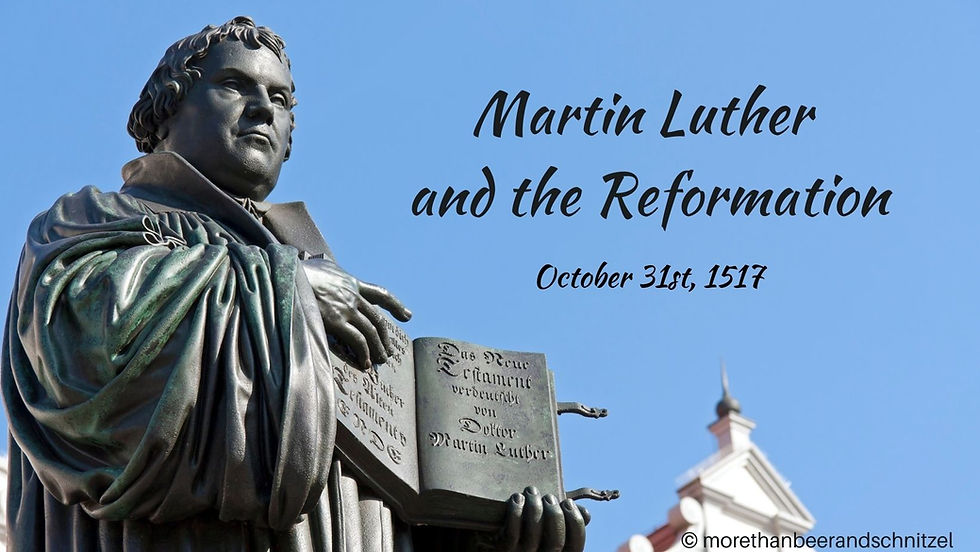
Martin Luther (1483-1546) was a German priest and theologian whose actions sparked the Protestant Reformation, a major religious movement that transformed Christianity in Europe. Born in Eisleben, Germany, Luther was initially an Augustinian monk who became increasingly disillusioned with the Catholic Church, particularly its sale of indulgences and the authority of the papacy.
In a sermon in 1883, Charles Spurgeon said, “Four hundred years ago, there came into this wicked world the son of a miner, or refiner of metals, who was to do no little towards undermining the Papacy and refining the church. The name of that babe was Martin Luther: a hero and a saint. Blessed was that day above all the days of the century, which it honored, for it bestowed a blessing on all succeeding ages, through ‘the monk that shook the world.’ His brave spirit overturned the tyranny of error, which had so long held nations in bondage. All human history since then has been more or less affected by the birth of that marvelous boy.”
Martin Luther went to the university at age 18 to study to be a lawyer, and, by all accounts, he was on his way to becoming a great one. Luther quickly earned a bachelor’s degree and a master’s degree. He was very talented and became a great debater at the university. He had become so good at public debate that the students started calling him "The Philosopher."
Music, poetry, and theology were his interests in school, but his father steered him towards law. Luther was the pension plan for his mother and father, Hans and Margaret. He was their ticket to a comfortable retirement. Hans wanted Martin to continue his studies in law, and Luther was on his way to success.
However, to his family's astonishment, he suddenly changed his career path. As he made his way back to school from his parents' house, a violent thunderstorm unexpectedly caught him. Luther was thrown from his horse as a bolt of lightning struck nearby; he was terrified, and he swore to St. Anne that if he lived, he would become a monk. And, of course, he lived. Two weeks later, after a last night of drinking with his buddies—his last free night as a regular sinner—the twenty-one-year-old Martin Luther knocked on the door of the local Augustinian monastery and became a monk. Similar to John Wesley erroneously thinking he could attain salvation through being a missionary (post from two days ago), Luther became a monk thinking it would save his soul. “I made the vow for the sake of my salvation.”
His family, especially Hans, was very upset and angry with young Martin—their boy, the shining star of the family, was throwing away his education and his life.
Hans later bitterly confronted Martin. “You learned, scholar,” he fumed, “have you never read in the Bible that you should honor your father and your mother? And here you have left me and your mother to look after ourselves in our old age.”
Young Luther strived to be a great monk—but above all he wanted to be right with God. In those days it was thought that there was no surer way to be right with God than to give up all, be a priest, monk, or nun, and live a life of poverty and suffering. In the monastery, Luther tried to be as perfect as he could be by obeying all the rules and living as pure a life as he could. “If ever a monk got to heaven by his monkery, it was I," Luther later said.
But the more the young Martin tried, the more condemned he felt. He was bewildered. He just couldn’t be good enough for God as much as he tried, and he tried harder than anyone. If Luther thought he could achieve peace with God and attain holiness and righteousness through being a monk, he was sadly mistaken; he would eventually realize.
“I crucified Christ daily in my cloistered life and blasphemed God by my wrong faith. Outwardly I kept myself chaste, poor, and obedient. I was much given to fasting, watching, praying, saying masses, and the like. Yet under the cloak of my outward respectability, I continually mistrusted, doubted, feared, hated, and blasphemed God. My righteousness was a filthy puddle. Satan loves such saints. They are his darlings, for they quickly destroy their body and soul by depriving them of the blessings of God’s generous gifts.”
Then as Luther was studying the Scriptures—something snapped—something revolutionized his life and, as a result, the whole world. When he would read Romans 1:17, “The righteous (just) shall live by faith,” he had been drawn not to the word “faith,” but to the word “righteous,” and it scared him.
Luther remarked, "I hated that word, 'the righteousness of God,' by which I had been taught according to the custom and use of all teachers—[that] God is righteous and punishes the unrighteous sinner." Luther felt that only the righteous could have faith; therefore, Martin could not have faith because he was not righteous. It terrified him.
But unlike the lightning bolt that missed him that led him to the monastery in the first place, this one hit him—a spiritual bolt. He started to see the passage differently. "At last,” he said, “meditating day and night, by the mercy of God, I...began to understand that the righteousness of God is that through which the righteous live by a gift of God, namely by faith....” Luther suddenly realized that faith, which is a gift from God, results in righteousness. “Here I felt as if I were entirely born again and had entered paradise itself through the gates that had been flung open."
Justification by faith. Justification—not just being forgiven—that is a part of it—but given the righteousness of God by faith. It's a gift, not an achievement. Martin found the gentle yoke of Christ and was free.
"This one and firm rock, which we call the doctrine of justification," says Luther, "is the chief article of the whole Christian doctrine, which comprehends the understanding of all godliness."
Through this passage, lightning did hit Luther: "The righteous (just) shall live by faith." And this simple truth brought thunder and lightning to the whole world.
Quotes by Martin Luther
Not only is the adoration of images considered idolatry, but also the act of trusting in one's own righteousness, works, and merits, as well as placing confidence in riches and power. While trust in riches and power is the most common form of idolatry, it is also the most harmful.
The Holy Spirit is no skeptic. He has written neither doubt nor mere opinion into our hearts, but rather solid assurances, which are more sure and solid than all experience and even life itself.
Whenever the true message of the cross is abolished, the anger of hypocrites and heretics ceases... and all things are at peace. This is a sure token that the devil is guarding the entry to the house and that the PURE doctrine of God's Word has been taken away. The Church, then, is in the BEST state when Satan assails it on every side, both with subtle sleights and outright violence. And likewise, it is in the WORST state when it is most at peace!
I am afraid that the schools will prove the very gates of hell, unless they diligently labor in explaining the Holy Scriptures and engraving them in the heart of the youth.


Comments